
Why Your Golf Ball Curves: Gear Effect Explained Simply
If your driver shots curve wildly, the cause is not always your swing path or clubface angle. With the driver, strike location has a huge influence on ball flight because of something called gear effect.
Gear effect is what happens when the ball is struck away from the center of the clubface. Because a driver has a larger head and more depth from the face to the back of the club than an iron, the head can twist more at impact. That twisting changes the spin placed on the golf ball.
The result: where you hit the ball on the face can make the ball hook, slice, or lose a surprising amount of distance.
What Is Gear Effect?
Gear effect is the spin created when the clubhead twists during an off-center strike.
Think of two gears turning against each other. When the ball contacts the toe or heel of the driver, the clubhead rotates slightly, and the ball responds with opposite spin. This is especially noticeable with the driver because the head is larger and the center of gravity is farther behind the face.
For a right-handed golfer:
- Toe strike: often creates draw or hook spin
- Heel strike: often creates fade or slice spin
- Centered strike: produces the most efficient ball speed and distance
For left-handed golfers, the visual curve direction is reversed, but the same gear-effect principle applies.
Toe Strikes: Why the Ball Hooks
When you hit the ball out of the toe of the driver, the clubhead twists, and gear effect tends to put draw or hook spin on the ball.
In the video example, a ball struck extremely far off the toe curved hard left and missed the fairway. Even though it was not a good strike, it still traveled farther than the heel strike because toe strikes with a driver often retain more distance than severe heel strikes.
That is why many golfers say, “My hook goes farther than my slice.” Often, that is not just because of the curve. It is because the hook came from a toe strike and the slice came from a heel strike.
Heel Strikes: Why the Ball Slices
When you hit the ball out of the heel, gear effect tends to create fade or slice spin.
In the demonstration, the heel strike produced a big slice that would likely have been lost on the course. It also carried only around 190 yards, with much lower ball speed than a centered strike.
A severe heel strike can cost you both accuracy and distance because the strike is inefficient and adds unwanted side spin.
Center Contact: Why It Matters So Much
The most important lesson is that centered contact can dramatically improve distance, even if your clubhead speed stays similar.
In the example:
- Severe heel strike: around 190 yards of carry
- Severe toe strike: farther than the heel strike, but still offline
- More centered strike: around 263 yards of carry and roughly 286 yards total
That is nearly a 100-yard difference between a poor strike and a centered strike with similar clubhead speed.
This is why driver ball striking is so important. You do not always need to swing harder to hit the ball farther. Sometimes you simply need to strike the ball closer to the middle of the face.
How to Check Your Driver Strike Location
To understand your ball flight, start by finding out where you are striking the ball on the face.
Try this simple process:
- Use face spray, impact tape, or a dry-erase marker on the driver face.
- Hit a normal drive.
- Check the mark on the clubface.
- Compare the strike location with the ball flight.
- Repeat for several shots to find your pattern.
You may discover that your slice is not only caused by an open face or out-to-in path. It may also be exaggerated by heel contact. Likewise, your hook may be made worse by toe contact.
Quick Gear Effect Guide
| Strike Location | Common Ball Flight | Typical Result |
|---|---|---|
| Toe | Draw or hook spin | Ball curves left for right-handed golfers |
| Heel | Fade or slice spin | Ball curves right for right-handed golfers |
| Center | Straighter, stronger flight | Best ball speed and distance |
Practice Goal
Your goal is not just to make a pretty swing. Your goal is to learn where the ball is contacting the clubface and gradually move that strike pattern closer to the center.
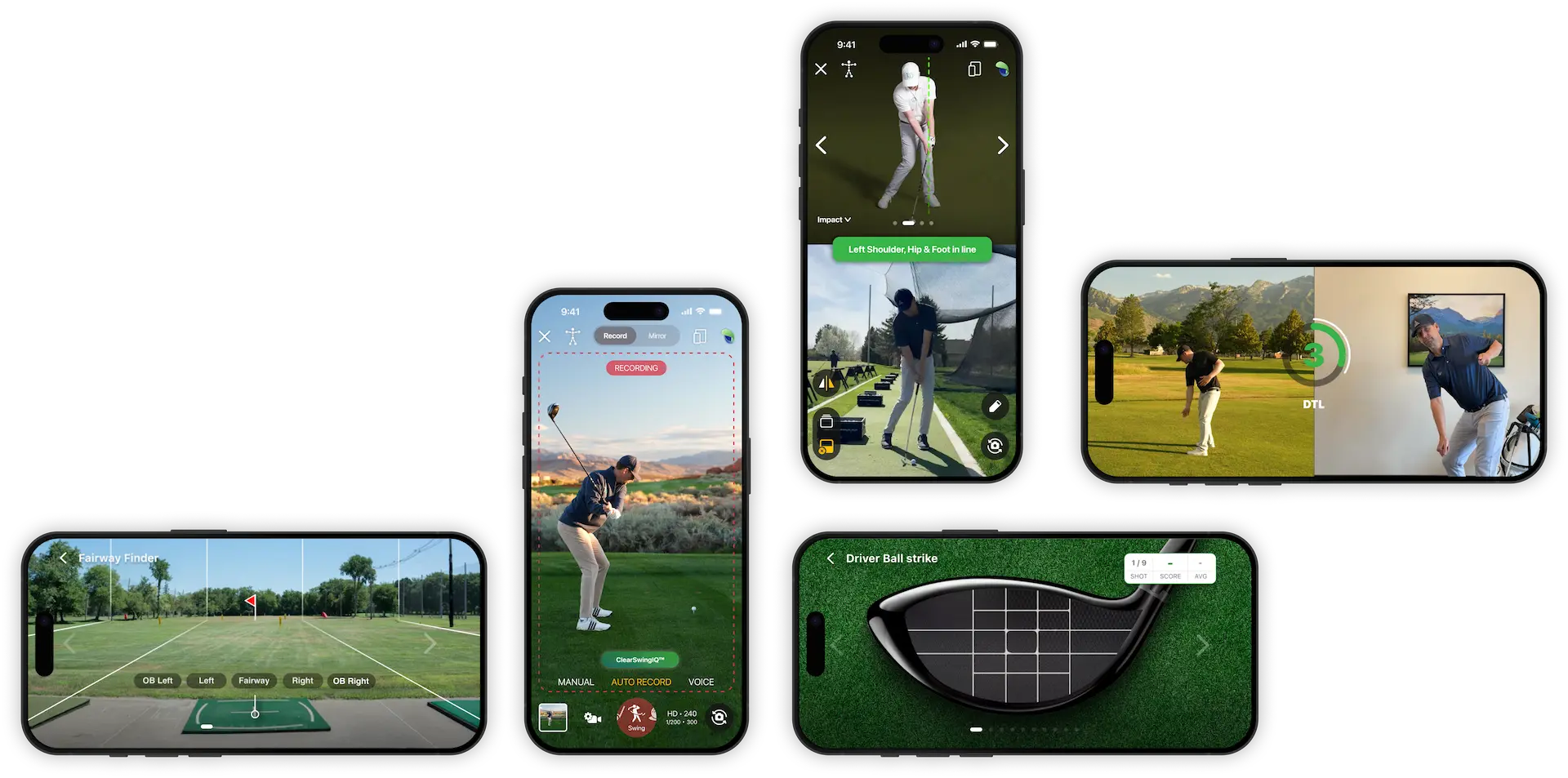
A good practice game is to hit a series of drives and score yourself based on strike location:
- 3 points for center contact
- 2 points for slightly toe or heel side
- 1 point for a big miss on the face
- 0 points for a miss that would be unplayable
Track your score over time and try to improve your average. This makes driver practice more focused and helps you connect strike location with ball flight.
Key Takeaway
Gear effect explains why off-center driver strikes can curve so dramatically. A toe strike tends to create hook spin, while a heel strike tends to create slice spin. Both can cost accuracy, and heel strikes especially can cost a lot of distance.
If you want longer, straighter drives, start by improving your strike location. Center contact can give you a huge distance gain without increasing swing speed.